Introduction
What Zero-CRUD is, what it does, and how it works alongside AI.
Zero-CRUD is a visual API builder and code generator: inside VS Code, turn a table schema into a runnable full-stack project (backend + frontend).
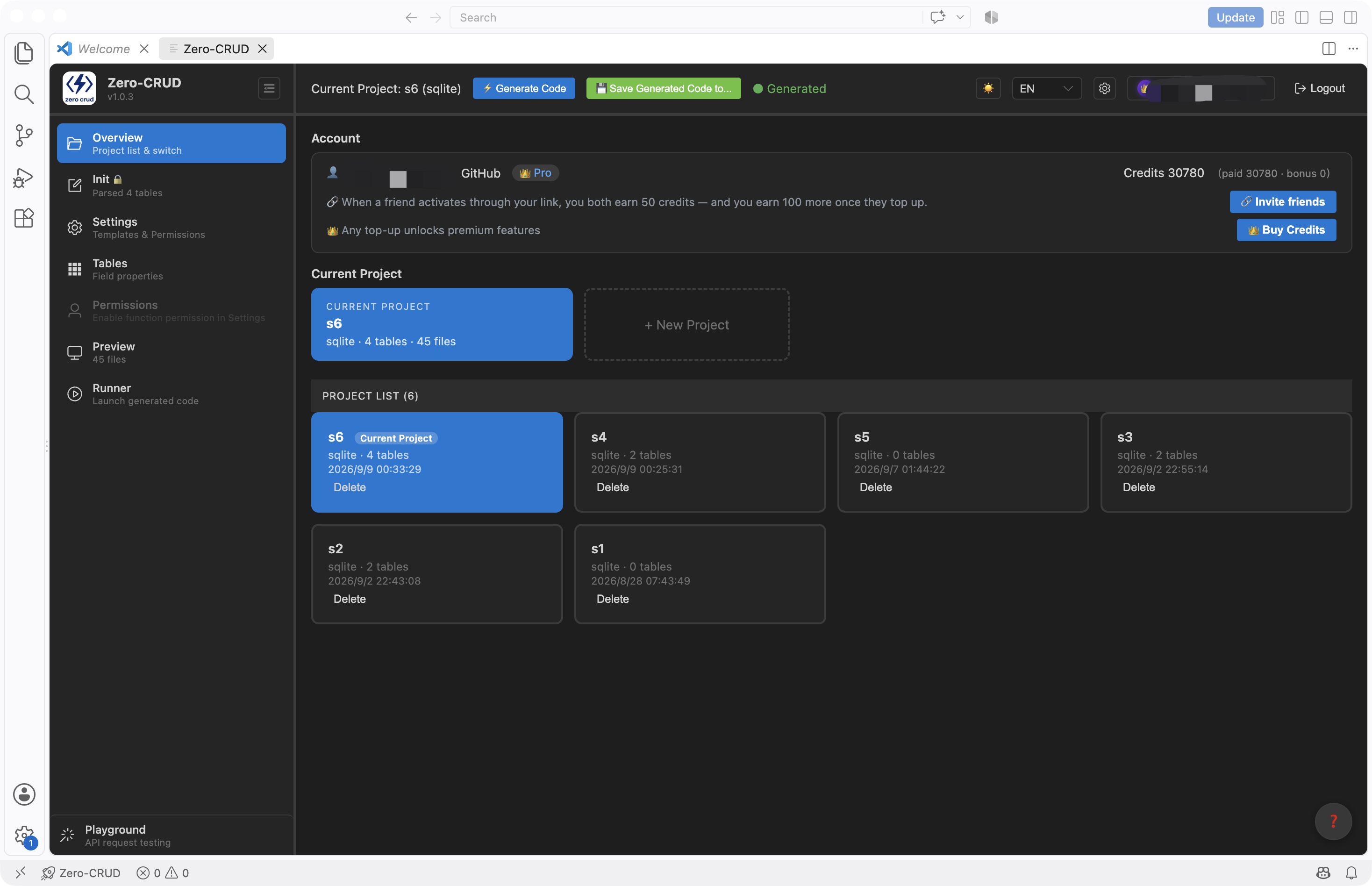
Four steps to a working app
- Describe your schema — paste SQL DDL, or connect to an existing database (either works)
- Configure your project and tables (optional) — set page size, which fields are visible/queryable/editable, permissions, system fields, and more
- Generate code — one click produces the backend + frontend; preview, download, or export it
- Run it — Runner starts everything with one click; Playground tests the APIs directly
Capability matrix
| Dimension | Support |
|---|---|
| Backend | Go / Python (FastAPI) / TypeScript (Express) / Java (Spring Boot) |
| Frontend | Vue (Element Plus) / React |
| Database | MySQL / PostgreSQL / SQLite / MariaDB |
| Built-in | CRUD API, pagination, batch ops, permissions, soft delete, audit, data ownership, optimistic locking, Docker |
Generated code: clean, consistent, safe
One table → one complete project. What you get is a fully runnable project, not scattered snippets.
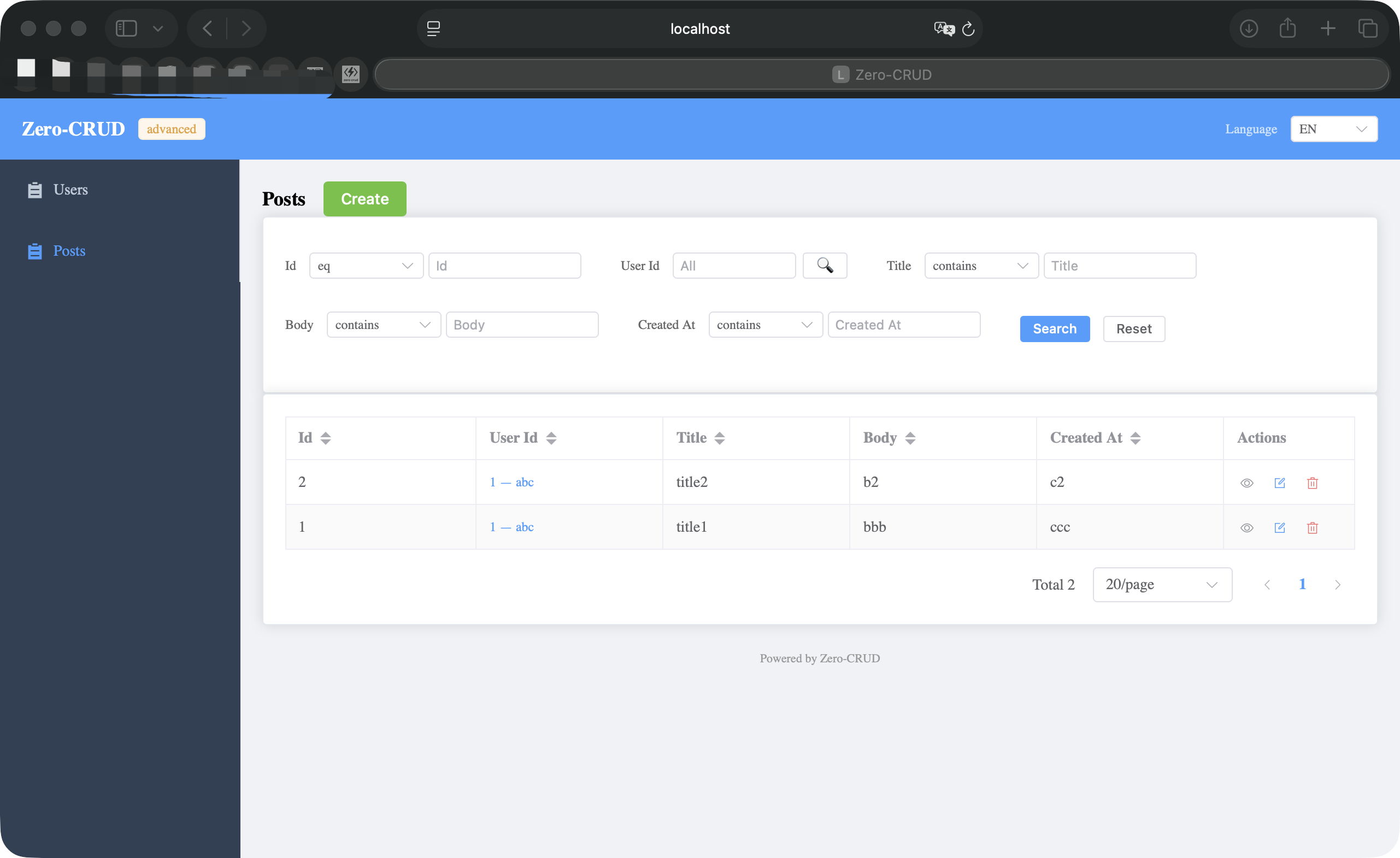
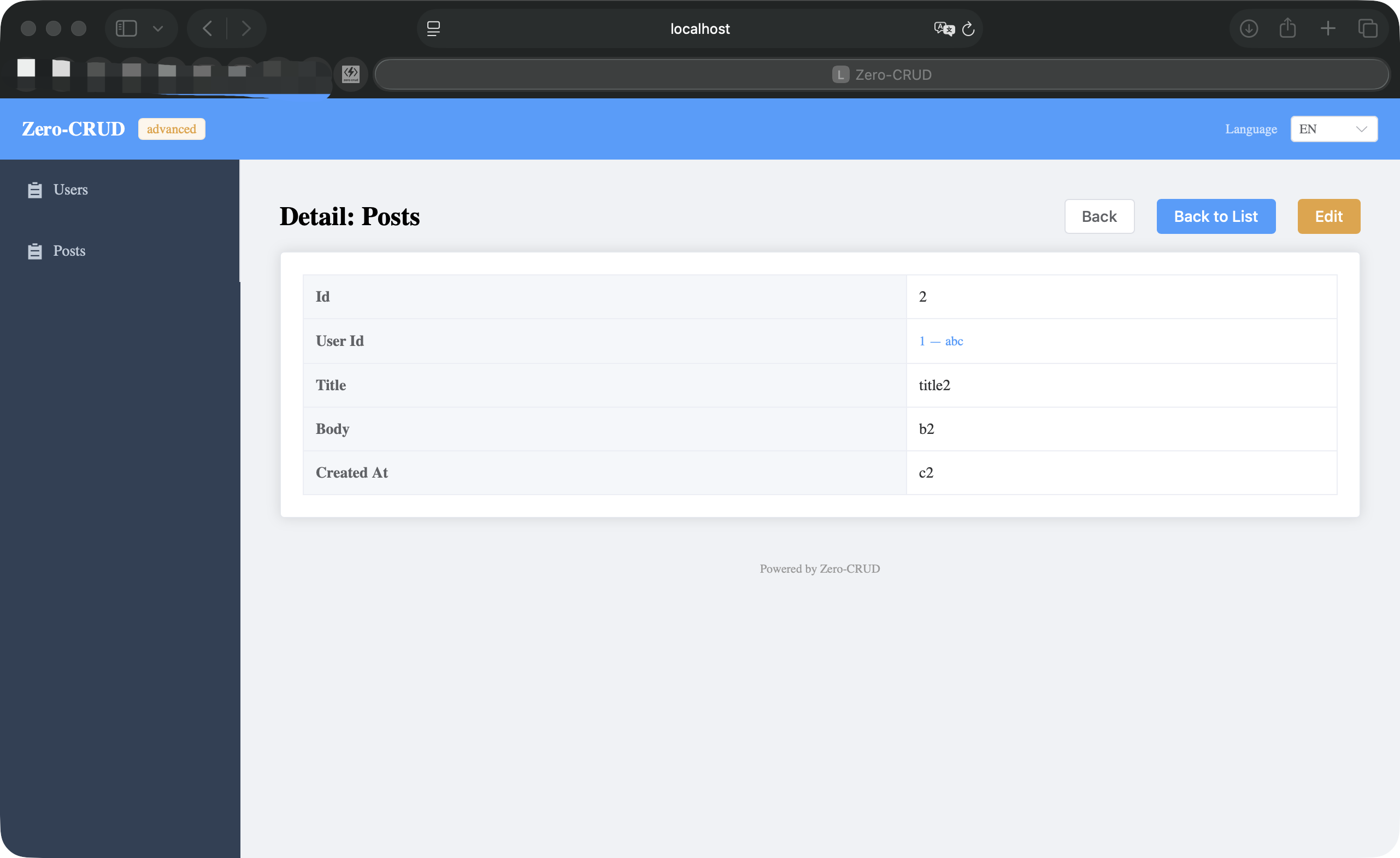
The frontend is already laid out for you
- List pages ship with pagination, sorting and combined filters — common query scenarios work out of the box
- Common field types (date, enum, number, boolean, etc.) get matching input & display components
- Tables and fields can be fine-grained configured: visible / queryable / insertable / editable are set per field, and pages + APIs follow automatically
The backend stays consistent across languages
- All four backends (Go / Python / TypeScript / Java) generate the same API semantics: the same table, whichever backend language you pick — pagination conventions, naming, and API structure stay aligned
- Naturally matches the frontend: field naming, pagination parameters, and response shapes are aligned end-to-end; change a config and the frontend follows
- Security baseline is on by default: parameterized queries prevent SQL injection, input validation, permission checks, soft-delete auto-filtering
What we are not
- Not a code host: we don’t host or lock in your code. Every generated file is fully yours — download or export it anytime and put it in your own repository.
- Not deployment/ops: running, deploying, and shipping is in your control — we just turn a table schema efficiently into a runnable project to speed up development.
- Not guaranteed production-ready out of the box: generated code is a solid engineering starting point; it still needs your secondary development and testing. The more complex the DDL, the more likely there are details templates don’t cover — review it under your own project process before shipping.
Zero-CRUD in the age of AI
- Large models are great at going from nothing to something, but the result isn’t guaranteed consistent — their input is natural language, and details like table schemas and field rules have to be inferred by the AI. Inference carries uncertainty, so the same request can generate different code twice.
- Zero-CRUD removes the uncertainty at the source: the input is a standardized table schema (DDL), and details like field attributes, permissions, and system fields are guided step by step in the workbench settings — once the requirements are complete, the output is deterministic.
- The value of an engineering scaffold is precisely stability and convention: how to wire permissions, how authentication lands, how to organize directories — Zero-CRUD gives deterministic standard answers.
- AI saves you from writing from scratch; Zero-CRUD saves you from fixing things over and over.
Work with AI, not against it
AI makes “writing code” easier than ever, but getting code from “it runs” to “stable, clean, maintainable” requires determinism along the way. Zero-CRUD and AI each do what they’re best at:
| Who | Owns what |
|---|---|
| You (or your AI tool) | Decides what the business needs: design the table schema (DDL) from requirements, define fields and relationships |
| Zero-CRUD | Deterministically produces a runnable full-stack project: standard CRUD APIs, permissions, auth, project structure — identical every time, known to be good |
| AI (Copilot / Cursor / Claude, etc.) | Adds personalized logic on top of the generated project: custom endpoints, special pages, complex validation |
A typical workflow:
Have your AI tool (e.g. Copilot / Cursor) design a sensible table schema from your requirements
↓
Hand the DDL to Zero-CRUD — generate a deterministic backend + frontend in one click
↓
Go back to AI to layer personalized features on top of the system
Who it’s for
- Backend engineers: quickly produce standard CRUD and engineering scaffolds
- Full-stack developers: one schema, backend and frontend at the same time
- Internal tools / admin panels: generate straight from a table schema, runnable in minutes